

Importers and distributors need delivery bags that match their customers’ working conditions and can be ordered against clear specifications. A product that looks attractive in a catalogue still needs the right dimensions, carrying arrangements and packaging to succeed in a commercial range. Good sourcing connects those details with the intended market before production begins.
BagsFactori manufactures wholesale delivery bags for food service, courier, logistics and healthcare applications. Our OEM and ODM approach allows buyers to discuss their own dimensions, materials, colors, branding and packaging requirements. Whether you are developing a private label range or supplying commercial accounts, start with a defined product brief and a realistic purchasing plan.
Build a Range Around Your Existing Customers
The strongest starting range usually reflects the businesses you already serve. A restaurant equipment distributor may have a clear route to market for food and pizza carriers. A supplier serving delivery fleets may need rider backpacks and parcel bags. Healthcare distributors require a separate assessment of the products and transport applications involved.
Review the complete delivery bag range for wholesale sourcing and identify a manageable selection. Each additional size, color and specification creates another stock item to forecast and replenish. A focused launch makes it easier to understand demand before committing working capital to a broad catalogue.
Ask customers about packaging dimensions, route conditions and replacement needs. Their answers can reveal whether a standard carrier is sufficient or whether a feature such as adjustable dividers would solve a recurring problem. Product development becomes more useful when it responds to an identifiable purchasing need.
Product Categories for Commercial Resale
Choose categories according to end user requirements rather than treating all delivery bags as interchangeable. The following comparison helps connect potential products with the customer accounts they may serve.
| Customer segment | Product category | Specification to confirm |
| Restaurants and takeaway businesses | Food delivery bags | Packaged order capacity and access |
| Pizzerias | Pizza delivery bags | Box dimensions and stacking space |
| Delivery fleets | Rider backpacks | Loaded handling and carrying fit |
| Couriers and fulfilment operators | Courier and logistics bags | Parcel capacity and working load |
| Healthcare suppliers | Medical transport bags | Defined application and performance requirements |
For restaurant customers, explore insulated food delivery bags for commercial distribution. Buyers should measure the packaging their customers use, including drinks or multiple meal containers where applicable. Internal space is more useful than an external size alone when assessing practical capacity.
Logistics distributors can review courier and logistics bags for delivery networks. These applications may prioritize parcel organization and carrying durability. The desired specification should reflect the expected working load and transport method rather than automatically adding insulation that the customer does not require.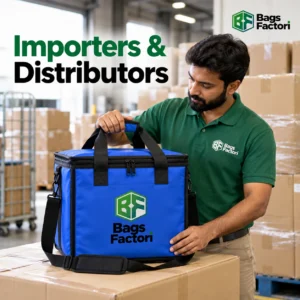
Private Label Manufacturing With Clear Brand Control
Private label delivery bags allow a distributor to present a consistent commercial range under its own identity. Branding can involve logo placement, colors, identification labels and suitable packaging. These details should be defined early because their cost and feasibility depend on the selected construction and order quantities.
Supply usable artwork and explain how the finished product will be sold. A bag for direct supply to fleet customers may need different labeling from a product displayed in a retail showroom. Confirm any packaging inserts, barcode requirements or carton markings before the production specification is finalized.
Approve branding on a physical sample whenever practical. Check legibility, placement and how the logo appears when the bag is loaded. Product photographs and written descriptions should then match the agreed item so your sales team presents accurate specifications to customers.
Understand OEM and ODM Before Requesting Prices
In an OEM project, the buyer generally supplies a defined design or technical specification for manufacturing. In an ODM project, the buyer typically works from a manufacturer’s design and discusses adaptations. The exact scope of each arrangement should be confirmed rather than inferred from the label alone.
For a new range, explain whether you already have a reference product, drawings or only an application brief. Specify which features are essential and which can be adjusted. This helps separate product development decisions from straightforward pricing discussions and reduces misunderstandings about the sample being requested.
Agree how design revisions will be handled and which approved version will guide production. If your project includes exclusivity, intellectual property or territory arrangements, those terms require a separate written commercial agreement. Logo customization by itself does not establish an exclusive distribution relationship.
Compare Materials Through Finished Product Performance
Material names are useful, but they do not describe the entire bag. Fabric coating, lining, reinforcement, seam construction, closures and handles contribute to how the finished item performs. Two products carrying the same fabric description may still differ significantly in workmanship and practical durability.
Use materials and quality options for delivery bag sourcing to prepare a more detailed discussion. Ask for the actual material specification and identify the features that matter to your customers. For weather exposed routes, examine the closure and seams alongside the exterior material before making water resistance claims.
Assess carrying comfort with representative loads. A stronger exterior may add weight without resolving an inadequate strap or base design. The commercial objective is a bag suited to its intended use, with product claims supported by the agreed specification and any relevant test evidence.
Use Sample Approval to Control Bulk Orders
An approved sample gives buyers and manufacturers a shared reference. Measure usable internal space, inspect branding and evaluate the bag with the customer’s typical packaged load. Check closures, handle attachment, divider placement and any packing requirements that affect warehouse handling.
Capture the approved construction in writing. Include dimensions and tolerances, material descriptions, component requirements, artwork and packaging instructions. Agree how substitutions or revisions will be approved before they appear in production. Photos are helpful supporting records, but they should accompany a clear specification.
For larger orders, discuss inspection arrangements before placing the purchase order. Define the characteristics to check and how nonconforming goods will be handled. A recorded approval process makes it easier to assess repeat shipments without relying on memory or a general statement that the quality should be the same.
Compare Total Landed Cost
The factory price is one part of the cost of imported stock. Freight, insurance where applicable, import charges, destination handling and local delivery may affect the amount you invest before products reach your warehouse. Compare quotations on the same agreed commercial basis to avoid misleading unit price comparisons.
A practical calculation is total applicable purchasing and import costs divided by the number of saleable units received. Include product development or packaging expenses where they form part of your purchasing cost. Then assess whether your intended selling price leaves room for local delivery, customer service and normal business overheads.
Request packed carton dimensions and weights for freight planning. Foldable construction may reduce shipping volume, but only where it remains suitable for the product. Discuss export and shipping requirements for bulk delivery bags before finalizing the order, and confirm destination requirements with your freight or customs adviser.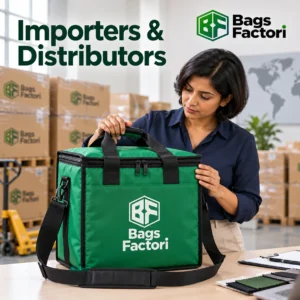
Plan Packaging and Reorders Together
Packaging should help your team receive, identify and distribute stock. Clear carton references can separate models, sizes and colors during unloading. Individual labels should match your inventory records so warehouse staff can locate the correct item without opening every bag.
Set a reorder plan using actual demand and the agreed production and shipping timeline. Review stock cover after the first sales period instead of assuming every model will sell equally. Maintaining a dated specification and approved artwork also helps preserve consistency when the next order is placed.
Frequently Asked Questions:
Q1. Can BagsFactori produce bags under our brand?
Private label branding can be discussed alongside dimensions, colors and packaging. Share the artwork and intended sales channel so the sample reflects how you will present the product.
Q2. What is the minimum order quantity?
Request an MOQ for each proposed model and customization level. Requirements can vary by materials and production setup, so avoid assuming that one quantity applies across the entire range.
Q3. Can several products be included in one sourcing project?
Discuss the product mix, quantities and packaging for each model. Confirm whether quantities are assessed separately and how different items will be identified for dispatch and receiving.
Q4. Should importers approve a sample first?
A sample is valuable for checking dimensions, construction, branding and customer suitability. Record the approved specification before authorizing bulk production, particularly when developing a new private label product.
Q5. How should healthcare products be marketed?
Keep claims specific to the documented product and intended application. An insulated carrier should not be advertised as meeting a defined pharmaceutical temperature requirement without evidence for the complete transport configuration.
Q6. What information is needed for a useful quotation?
Send the product category, dimensions, quantity by model, materials, artwork, packaging requirements and destination. Include your target application and any test requirements so quotations can be compared accurately.
Start Your Wholesale Sourcing Discussion
Prepare a short product brief around the customers you intend to serve. Share your proposed models, order quantities, customization needs and delivery destination through request a wholesale delivery bag quotation. A clear brief helps turn initial price enquiries into a product specification your business can review and order with confidence.